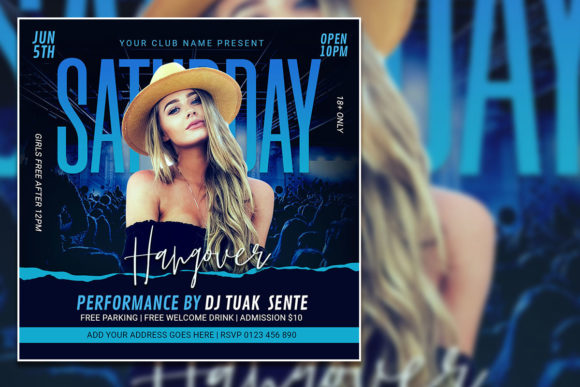
Design a Buzz-Worthy Saturday Night Party Flyer with a PSD Template
The energy of a great Saturday night party is infectious—it’s a feeling of anticipation, fun, and connection. How do you bottle that feeling and translate it into a single image that stops someone mid-scroll? A powerful social media post or a striking flyer is your first impression, your digital handshake, and your main tool for generating excitement. It’s not just about announcing an event; it’s about crafting an experience before it even begins. For designers, marketers, and event organizers, having a flexible, professional starting point is key to creating visuals that truly resonate and drive attendance.
Beyond the Invite: A Versatile Tool for Modern Marketing
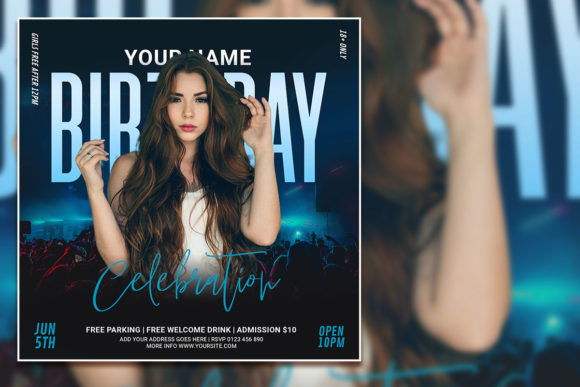
While its name suggests a specific use, a high-quality, fully editable party flyer template is a surprisingly versatile asset in your creative toolkit. Think of it not as a one-trick pony, but as a foundational design system. The clean, modern layout and organized PSD layers provide a professional framework that can be adapted far beyond a single event. It’s a practical solution for anyone needing to produce polished visual content quickly and consistently.
Consider the real-world applications. A boutique hotel could use the template to promote a weekly rooftop cocktail hour, swapping the photo for a stunning view of the city skyline. A podcast host might adapt the design for a live recording event, using the space for guest headshots and episode details. Small business owners can repurpose the structure for seasonal sales announcements, product launch teasers, or exclusive member-only previews. The core strength lies in its editability—every element is at your command, allowing you to align the final output perfectly with your brand identity and specific campaign goals.
Crafting a Visual That Captures the Vibe
The effectiveness of a social media graphic hinges on its ability to communicate mood and information at a glance. This is where understanding visual principles becomes your superpower. The template’s design likely employs a strategic balance of negative space, typography hierarchy, and color contrast. These aren't just decorative choices; they are functional tools for guiding the viewer's eye.
For instance, the font choices included in the PSD file are critical. A bold, modern display font for the headline grabs attention, while a clean, readable sans-serif for the details ensures the information is easily absorbed. When you edit the text, think about more than just the words. Adjusting the font size, weight, and spacing can dramatically change the tone. Tight spacing can feel urgent and energetic, while more open spacing feels elegant and relaxed. The right typography pairing reinforces your message—pairing a stylish script font with a sturdy sans-serif creates a dynamic contrast that feels both professional and inviting.
Practical Steps to Make It Uniquely Yours
The true value of a template is unlocked through customization. Opening the PSD file in Adobe Photoshop is just the first step. Here’s how to approach the editing process with a strategic mindset:
- Start with Your Core Asset: The photo is the heart of the post. Replace the placeholder with a high-resolution image that tells your story. For a nightclub event, this might be a vibrant shot of the crowd or a moody, atmospheric detail. For a community gathering, a warm, inclusive image of people connecting works best. Ensure the photo quality matches the template's 300 dpi resolution for crisp results.
- Edit Text with Purpose: Don’t just replace the words. Use the Text Tool to select each layer and consider if the font style still serves your message. If the event is a sophisticated wine tasting, you might switch to an elegant serif. For a backyard barbecue, a friendly, rounded sans-serif could be more appropriate. Consistency in your typography across all marketing materials strengthens your brand recognition.
- Refine the Color Palette: The template's RGB color mode is perfect for digital screens. Use the Color Picker tool to adjust hues to match your brand colors or the event's theme. A monochromatic scheme can feel sleek and modern, while complementary colors create vibrant energy. Always check the contrast between text and background to maintain excellent readability on both desktop and mobile devices.
- Leverage Organized Layers: A well-organized PSD file is a gift. Layers are typically named logically (e.g., "Title Text," "Background," "Photo Placeholder"). This allows you to easily isolate and adjust specific elements without affecting the rest of the design. You can toggle layers on and off to experiment with different compositions or to create multiple versions of the same post.
From Digital Post to Tangible Experience
While the primary output is a digital social media post, the design's impact doesn't have to end there. The same visual language can and should be extended to create a cohesive experience for your audience. This practice is at the heart of effective brand identity and marketing.
Take the finalized design and adapt it for other touchpoints. Resize it for an Instagram Story or a Facebook event cover. Use the core graphic elements—the chosen fonts, color palette, and photo style—to design matching Instagram highlight covers, email newsletter headers, or even a simple website banner. For physical events, the design can be easily exported and printed as flyers, posters, or table tents. This multi-channel approach ensures that no matter where your audience encounters your event, the look and feel are instantly recognizable, building trust and professionalism. It transforms a single social media graphic into the cornerstone of a broader, more memorable campaign.